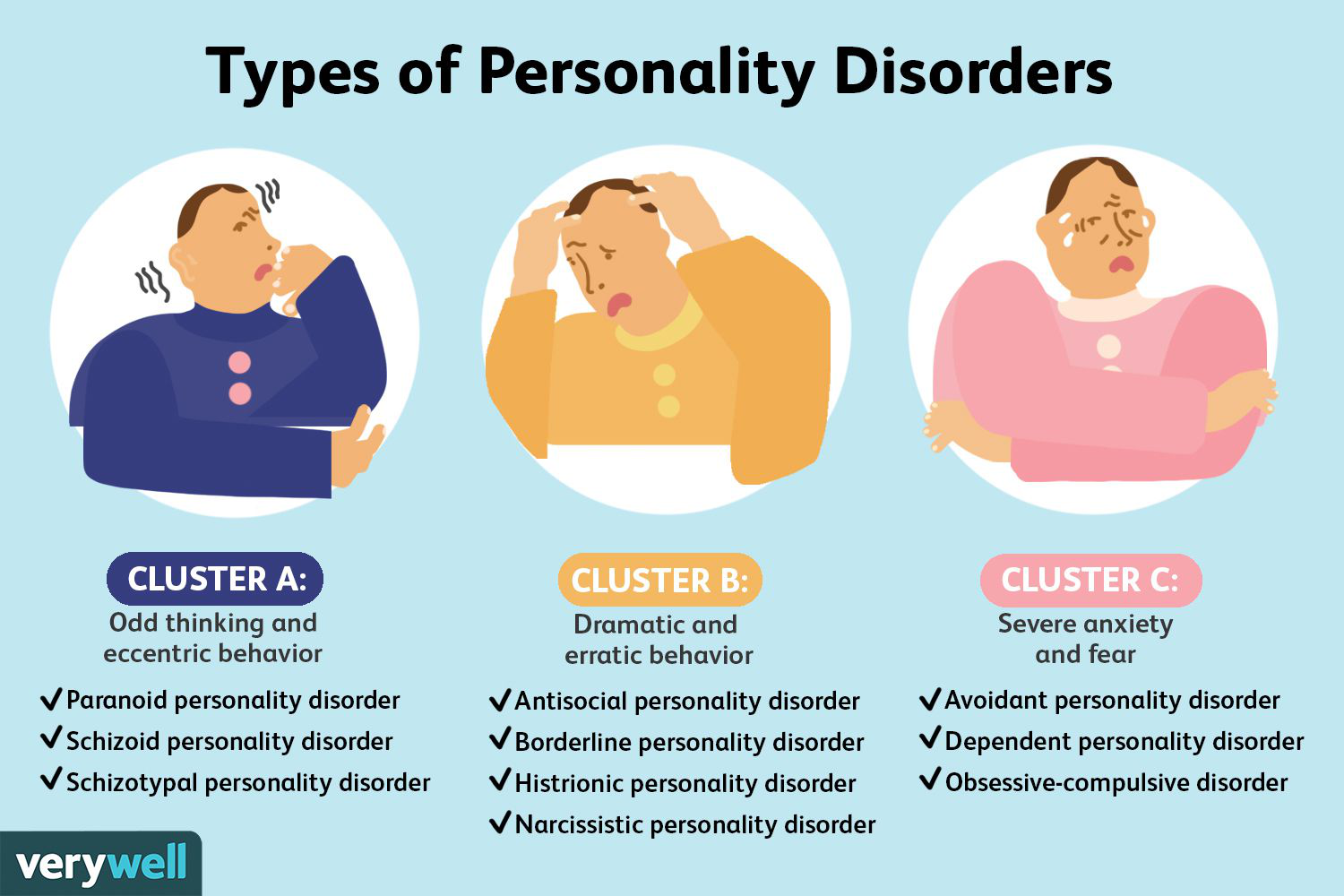
What is personality disorder?
Personality disorders are a group of mental health conditions that are characterized by inflexible and atypical patterns of thinking, feeling, and behaving. These inner experiences and behaviors often differ from the expectations of the culture in which someone lives.
If you have a personality disorder, you may have a difficult time relating to others and dealing with everyday problems in the ways that are expected by your cultural group. You may not be fully aware of this discrepancy between your thoughts and behaviors and those accepted by society.
You may have a view of the world that’s quite different than that of others. As a result, you could find it difficult to participate in social, educational, and family activities.
These behaviors and attitudes often cause problems and limitations in relationships, social encounters, and work or school settings. They may also make people you feel isolated, which can contribute to depression and anxiety.
If you have a personality disorder, you may have a difficult time relating to others and dealing with everyday problems in the ways that are expected by your cultural group. You may not be fully aware of this discrepancy between your thoughts and behaviors and those accepted by society.
You may have a view of the world that’s quite different than that of others. As a result, you could find it difficult to participate in social, educational, and family activities.
These behaviors and attitudes often cause problems and limitations in relationships, social encounters, and work or school settings. They may also make people you feel isolated, which can contribute to depression and anxiety.