Anxiety

What is anxiety disorder?
An anxiety disorder is a type of mental health condition. If you have an anxiety disorder, you may respond to certain things and situations with fear and dread. You may also experience physical signs of anxiety, such as a pounding heart and sweating.
It’s normal to have some anxiety. You may feel anxious or nervous if you have to tackle a problem at work, go to an interview, take a test or make an important decision. And anxiety can even be beneficial. For example, anxiety helps us notice dangerous situations and focuses our attention, so we stay safe.
But an anxiety disorder goes beyond the regular nervousness and slight fear you may feel from time to time. An anxiety disorder happens when:
  • Anxiety interferes with your ability to function.
  • You often overreact when something triggers your emotions.
  • You can’t control your responses to situations.


Anxiety disorders can make it difficult to get through the day. Fortunately, there are several effective treatments for anxiety disorders.
What are the general symptoms?

While each specific disorder comes with its own anxiety symptoms, there are tell-tale signs that anxiety is becoming unmanageable or is beginning to disrupt daily functioning.
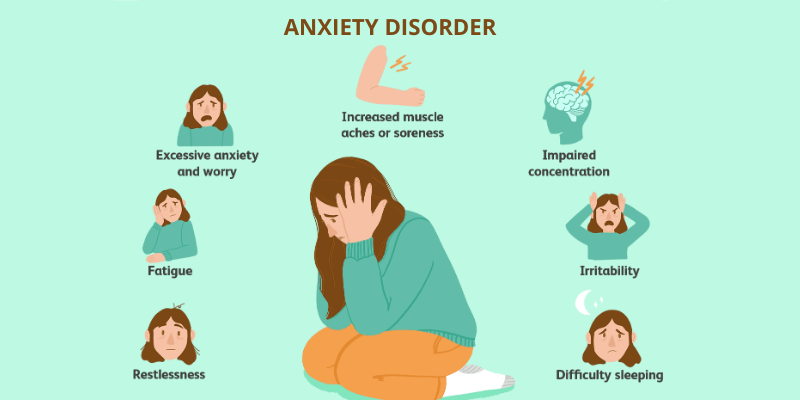
Symptoms common to all anxiety disorders include:


If you notice these symptoms and they last six months or longer, you may have an anxiety disorder.

What causes anxiety disorders?
Anxiety disorders are like other forms of mental illness. They don’t come from personal weakness, character flaws or problems with upbringing.
But researchers don’t know exactly what causes anxiety disorders. They suspect a combination of factors plays a role:

1) Chemical imbalance: Severe or long-lasting stress can change the chemical balance that controls your mood. Experiencing a lot of stress over a long period can lead to an anxiety disorder.
2) Environmental factors: Experiencing a trauma might trigger an anxiety disorder, especially in someone who has inherited a higher risk to start.
3) Heredity: Anxiety disorders tend to run in families. You may inherit them from one or both parents, like eye color.
How are anxiety disorders diagnosed?
Getting a diagnosis can be the first step to getting treatment. While there is no definitive test for anxiety, if symptoms are present and persistent, your healthcare provider may conduct a physical assessment and may run diagnostic tests to rule out potential medical causes.
If no physical illness is found to be causing your symptoms, you will be referred to a psychiatrist or another mental health professional to be evaluated for an anxiety disorder. They will use the standard reference manual for diagnosing recognized mental illnesses in the United States, the Diagnostic and Statistical Manual of Mental Disorders 5th Edition (DSM-5), to determine if you have an anxiety disorder.
The diagnostic criteria for each anxiety disorder are different. You may be asked questions like whether you worry more days than not and if you’ve noticed any physical symptoms such as restlessness, feeling tired easily, trouble concentrating, irritability, muscle tension, or trouble sleeping.
NGO's willing to help.
Various Non Profit Organizations as well as NGO's providing counselling and resources for anxiety.
Some of these centres are: